SIA Business Licensing Consultation: A Defining Moment for the UK Private Security Industry
December 28, 2025
The vast majority of UK private security companies currently operate without any oversight, leaving clients and the public exposed to inconsistent standards and increased risk. Mandatory business licensing would ensure all security firms meet enforceable quality and compliance standards, creating a professional, trustworthy, and accountable security industry that protects its workers, the public and businesses.
The United Kingdom’s private security industry stands at a crucial inflection point. After more than two decades of evolving regulation under the Security Industry Authority (SIA), the Government has initiated a public consultation on the potential introduction of mandatory business licensing, a change that, if enacted, would significantly redefine how security services are governed, audited, procured and delivered across the UK. This development represents one of the most consequential regulatory shifts in the sector’s modern history, driven by persistent concerns around rogue operators, lapses in oversight, and the urgent need to enhance public safety and industry credibility.
In this article, we provide a comprehensive overview of the issues driving these reforms, the context and rationale for change, the nature of the Government’s consultation, and what it means for clients, operators, and the public. We also explain why, as a company already committed to the highest standards, including voluntary participation in the SIA’s Approved Contractor Scheme (ACS), we view these proposals as overwhelmingly positive.
The SIA was established under the Private Security Industry Act 2001 to regulate the private security sector and protect the public by setting and enforcing licensing standards for individuals performing security functions. It is an executive non‑departmental public body sponsored by the Home Office, with statutory responsibility for licensing individuals engaged in specific security activities such as door supervision, security guarding, CCTV operations, close protection, and key holding. It also administers voluntary schemes like the Approved Contractor Scheme (ACS),designed to recognise and incentivise high‑quality business practice.
In recent years, the SIA’s strategic planning documents have emphasised a holistic regulatory mission: to improve individual licence conditions while also driving improvements in business‑level standards, enforcement, and public trust. The regulator’s published business plans explicitly highlight the need to strengthen compliance, inspection, and enforcement to deter criminality and malpractice in the industry.
Despite this commitment, the current regime does not require all security businesses to be licensed or regulated. Instead, companies can choose to participate in voluntary quality programmes like the ACS, meaning a large proportion of the industry operates with minimal or no oversight at all. The Government’s new consultation is set to address this huge gap.
The debate over business licensing is not new; it has been prompted by repeated concerns that the existing regulatory framework, which is focused solely on individual licences is insufficient to ensure consistent standards across all security companies. Several factors have driven calls for reform which include:
One of the most influential pressures for change has been the Manchester Arena Inquiry, which followed a fatal terrorist attack at the Manchester Arena in 2017 where 22 innocent people, many of whom children, were killed. Among its conclusions were recommendations that go beyond individual vetting and specifically, that security businesses themselves should be subject to formal licensing to ensure better preparedness and oversight of services that protect the public. The Government’s recent consultation explicitly cites Inquiry recommendations that “security businesses should be licensed by the Security Industry Authority”.
The UK security sector has long struggled with rogue companies and criminal operators exploiting regulatory gaps, undermining legitimate firms and potentially putting clients and the public at risk. SIA strategic documents and enforcement reports note that non‑compliance, including licensing breaches and serious offences continues to erode public confidence and create unfair competition. Enforcement operations in recent years have targeted licence fraud and other serious illegal activity, recognising that some individuals and businesses have “no intention of complying with the law or basic public protection standards”.
In the absence of mandatory business licensing, companies that provide security services, including contracts for personnel deployment and operational oversight can operate without systematic checks on governance, financial probity, or organisational conduct. By contrast, individual licence holders are subject to vetting and criminal record criteria (with additional tightening proposed). However, without company‑level accountability, systemic issues within firms can go completely undetected and unaddressed.
Independent analyses of the sector (including stakeholder submissions to policymakers) have pointed out that unregulated operators disproportionately evade tax, misuse immigration channels, and facilitate labour exploitation, weakening both public safety and economic integrity. Alarmingly, it is estimated that more than £1 billion a year is evaded, resulting in a substantial loss to the public purse. Proponents of mandatory business licensing argue that a statutory system would help close these loopholes and create a level playing field for compliant businesses.
Taken together, these drivers demonstrate a clear rationale for re‑examining how the industry is regulated, not only at the level of individual operatives, but at the structural level of business operations.
In December 2025, the Government launched a 12‑week public consultation seeking views on a range of options related to the introduction of business licensing for security businesses. The consultation, led by the Home Office in conjunction with the SIA, is designed to explore regulatory and non‑regulatory approaches, ensuring that any new regime balances proportionality with effectiveness, considers business impacts, and achieves demonstrable public safety outcomes.
Key topics include:
Critically, the consultation does not assume a predetermined outcome. Instead, it invites input from a broad range of stakeholders including individual operatives, security businesses, buyers of security services, in‑house employers, industry associations, and members of the public on how best to shape the future regulatory framework.
Findings from an earlier consultation on the future oft the SIA’s business approval scheme (a voluntary predecessor to potential mandatory licensing) indicate strong industry interest in evolving how business standards are defined and upheld. That consultation received substantive responses and emphasised the importance of public protection at the heart of any future regime.
One of the most persistent criticisms of the private security sector is that a large proportion of operators exploit regulatory gaps to engage in substandard or unlawful behaviour. These practices include:
Such behaviour harms genuine businesses, undermines competition based on quality, and, most importantly, creates huge risks for clients and the public, particularly in settings where security personnel play critical roles in maintaining safety and responding to emergencies.
It is not only businesses that are at issue. Criminal cases involving licence misuse such as fraudulently allowing unqualified individuals to work under another person’s licence underline the importance of robust controls at every level of industry practice. While individual licensing reforms have tightened criminality criteria and vetting processes, the absence of business licensing means that organisational practices can still facilitate or conceal compromised individuals from effective regulatory scrutiny.
By introducing mandatory business‑level licensing, regulators would be better able to monitor corporate conduct, ensure integrity in organisational governance, and respond proactively to risks that individual licensing alone cannot capture.
The private security industry is increasingly deployed in contexts of high public exposure, from major events and public venues to critical infrastructure and environmental security. As a result, consistency in standards and verification of company‑level practices is pivotal to maintaining public trust in the sector’s ability to deliver robust protection.
Mandatory business licensing would ensure that companies, not just individuals, meet baseline standards, including organisational governance, risk management, compliance frameworks, and evidence of adherence to legal and ethical obligations, which in turn should reinforce public and client confidence.
The SIA’s Approved Contractor Scheme (ACS) has historically provided a voluntary means for security businesses to demonstrate quality and compliance beyond individual licensing requirements. Companies approved under the ACS undergo regular assessment and monitoring to ensure they meet defined standards of operational and organisational performance.
However, despite its recognised value, the ACS remains voluntary, and its uptake across the industry has been substantially limited with only a small fraction of total companies electing to participate. Data suggests that while ACS approval currently covers some 750 businesses, tens of thousands of companies operate without any equivalent external assessment.
This disparity creates an uneven landscape in which responsible operators voluntarily subject themselves to rigorous scrutiny, while many others continue without comparable oversight. This inconsistency is central to the argument for introducing mandatory business licensing, ensuring that all companies providing security services meet a consistent baseline of standard and accountability.
The case for mandatory business licensing rests on several fundamental benefits:
1. Raising Standards Across the Board
Mandatory licensing would require all security companies operating in the UK to meet clear regulatory criteria, closing gaps in oversight and reducing the prevalence of operators who “fly under the radar”. This would help drive up standards throughout the industry, making it harder for rogue actors to exploit regulatory loopholes.
2. Protecting Clients and the Public
Clients of private security, whether government agencies, large commercial enterprises, or individual venues, would gain greater confidence that the companies they engage are subject to enforceable standards. Public safety would be better protected if all firms supplying security services were licensed and accountable to consistent rules.
3. Supporting Fair Competition
Responsible companies that invest in training, compliance, and quality assurance would no longer be undercut by competitors who avoid such investments by operating without adequate oversight. A licensing regime would promote equitable commercial conditions.
4. Enhancing Enforcement
Business licensing would provide regulators with statutory tools to impose sanctions, conduct inspections, and remove non‑compliant operators from the market. This supports not only public protection but the effectiveness of law enforcement and regulatory partners in deterring criminal conduct.
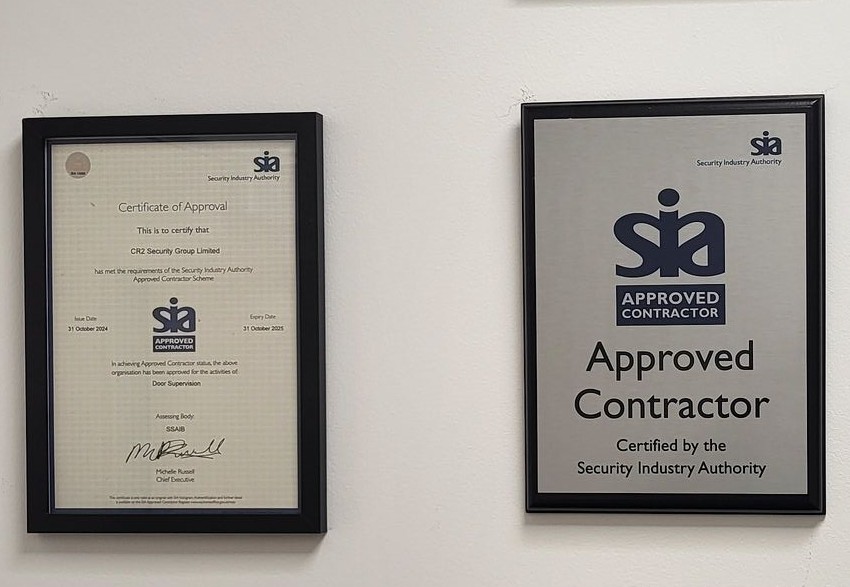
As a company that already participates in the SIA’s Approved Contractor Scheme (ACS), we view the SIA’s consultation on mandatory business licensing as excellent news for the industry and a historic opportunity to improve standards.
Our voluntary engagement with the ACS reflects a longstanding commitment to professionalism, compliance, and public protection. We choose to subject ourselves to the rigour of external assessment because we believe that our customers matter, our staff matter and that high standards are essential to delivering security services that clients and the wider public can trust.
In contrast, the vast majority of the industry which is estimated by authoritative sources to be well over 90% of companies currently operate outside such oversight, free from any statutory obligation to demonstrate quality or compliance. Requiring all businesses to be licensed would help level the playing field and ensure that all security services are delivered under stringent, enforceable criteria.
This approach would protect clients from substandard service, reduce the presence of rogue operators, and affirm our sector’s role as a professional and trusted part of the UK’s broader public safety infrastructure.
The consultation process represents an important opportunity for stakeholders across the sector to influence how a business licensing regime could be structured. Engagement will inform whether the Government proceeds with legislative reform and how criteria and obligations are balanced with proportionality and operational feasibility.
Preliminary consultations and business approval scheme responses indicate that industry actors are keenly interested in ensuring that future arrangements are both practical and effective. The next phase which potentially involves further consultation and detailed proposal design is expected to span into 2026 and beyond.
The SIA’s business licensing consultation is not merely a regulatory exercise, it is a huge strategic moment for the private security sector to redefine itself in the interests of public protection, commercial integrity and professional excellence.
By exploring the introduction of mandatory business licensing, the Government and the SIA are responding to enduring challenges: rogue operators exploiting regulatory gaps, uneven standards across firms, and public expectations for safety and accountability in services that touch millions of people every day.
For responsible operators committed to high standards, including companies participating in voluntary schemes like the ACS, this consultation represents not only a validation of best practice but a pathway toward an industry that is more trusted, more transparent, more professional and more resilient.
Mandatory business licensing, if designed with clarity, proportionality, and a focus on public protection could mark the beginning of anew era for the UK private security industry, one in which quality and accountability are fundamental and not optional.
CR2 Security Group delivers professional, reliable security services across Wiltshire, Somerset, Dorset and the wider UK. We protect businesses, organisations and private clients with tailored security solutions designed around your specific risks, needs and budgets.
From education and healthcare to construction, retail, logistics, and residential properties, our experienced team provides proactive, responsive, and dependable protection - giving you total peace of mind.
Our services include:
With local expertise, highly trained officers, and a commitment to excellence, CR2 Security Group is a partner you can trust. Get in contact today on 03301339142 or office@cr2security.com
Want to step up your security? Get in touch with CR2 Security for a free security survey!
Stay informed with the latest updates from CR2 Security. Explore company news, important announcements, and insights into our security services—all in one place!


.png)


.avif)



.webp)
.webp)